Block Color Mania, Puzzle Game
- 4.9
- Rating
- 5.00M
- Installs
- Free
- Price
 Analysis by App-foxy
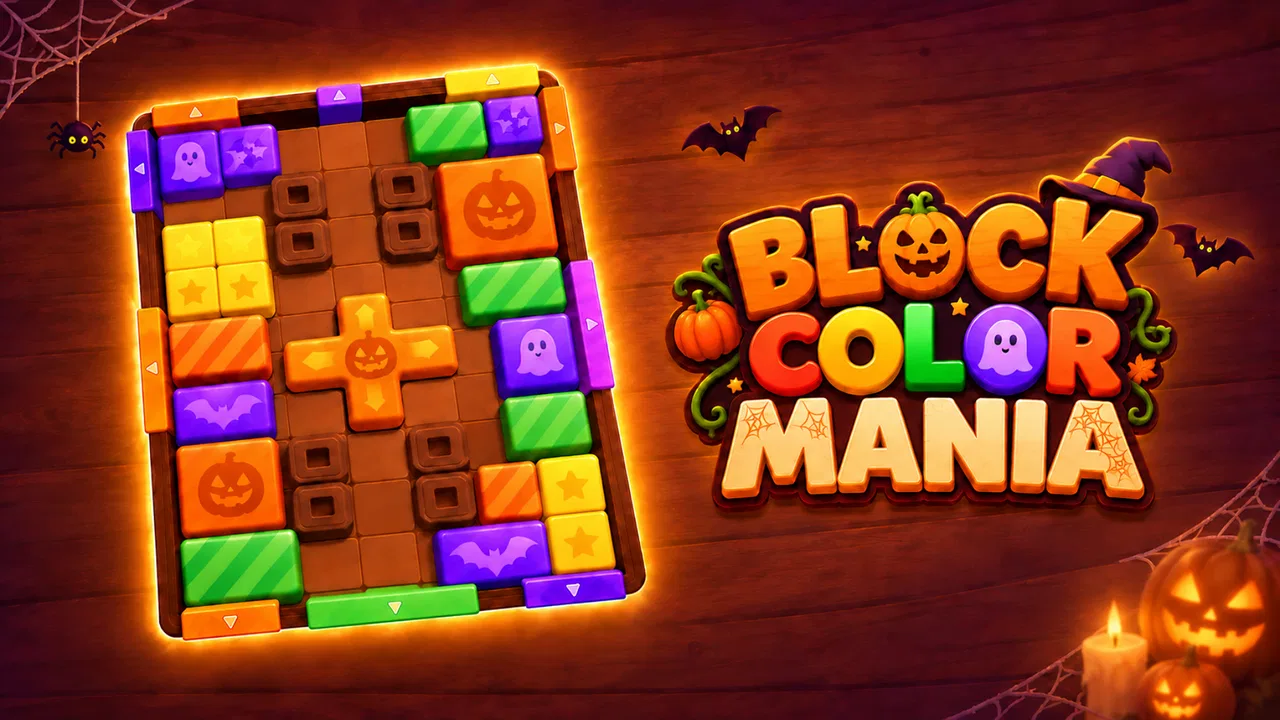
I spent time with Block Color Mania as a calm, board-based puzzle game, and my first impression was clear: this is aimed at people who want to think without being rushed. The central idea is simple—place colored blocks on a wooden board and clear the resulting groups—but the relaxed pace gives each move more weight than the bright, casual presentation initially suggests. There is no countdown pushing me to make a quick decision, so I can pause, study the available spaces, and continue when I am ready.
That makes it a very different experience from fast matching games or puzzle titles built around short reaction windows. I would describe it as a quiet brain teaser for small breaks, not as a competitive challenge that demands constant attention. The game is free to start, carries an Everyone age rating, and comes from Brainteaser Puzzle Game Studio. Its current version is 2.6.0, and it runs on Android 7.0 or newer.
How the board feels in everyday play
The wooden-board setting gives the game a warmer feel than a plain grid filled with abstract tiles. I found myself treating each placement as a little planning exercise rather than simply dropping pieces wherever there was room. A move can solve the immediate problem while also creating an awkward corner for the next piece, so the most satisfying turns are usually the ones that improve the board in two ways at once.
You May Also Like

 Blood Strike: 2.5 Anniversary
Blood Strike’s Loadouts Turn Every Drop Into a Tactical Gamble
A close look at Blood Strike’s custom loadouts: how fast access to signature weapons reshapes its battle royale rhythm, rewards preparation, and narrows the gap between fights.

 Pandora - Music & Podcasts
Pandora’s Music Is Easy to Start, but Harder to Recover
Pandora’s strength is its low-effort path from a seed to a station. Its weak spot is how much confidence it asks you to place in connection, setup, and quiet recovery.

 8 Ball Pool
 Is Built on Rivalries, Rematches, and Routine
A close look at the rivalries, rematches, shared routines, and unanswered safety questions that turn a quick pool match into a persistent mobile community.

 Samsung Music
’s Quiet Strength Is Playing What You Already Own
Its reach comes less from spectacle than from dependable access to a personal library. That simplicity is both the app’s strongest retention engine and its ceiling.

 AccuWeather: Weather Radar
AccuWeather Review: A Quick, Clear Forecast for Everyday Decisions
For everyday plans, the best forecast is the one you can understand quickly. AccuWeather makes rain timing, radar, and local conditions easy to act on, with a few trade-offs.

 Hill Climb Racing
Why Hill Climb Racing Still Turns Crashes Into One More Run
A tiny car, a bumpy hill and one more upgrade: Hill Climb Racing keeps resurfacing because its simple chaos makes every near-miss feel personal.
More From Our News Desk



The lack of a timer is the defining choice. In many block puzzles, pressure changes the experience from thoughtful to frantic. Here, I can inspect the shape and color of a block, compare several possible positions, and only then commit. That is useful when I am playing on public transport, during a short rest, or while winding down in the evening. I do not need to keep one eye on a shrinking clock.
At the same time, “no timer” does not mean every decision is effortless. A board can still become difficult when open spaces are fragmented or when a large piece arrives at an inconvenient moment. The challenge comes from managing room and anticipating future placements, rather than from speed. Players who enjoy spatial planning should get more from it than people who only want automatic, low-effort matching.
One practical habit helped me play more consistently: I stopped focusing only on the largest immediate clear. Before placing a block, I checked whether it would preserve a long open lane and whether it would leave enough room for an awkward shape. That small change made the game feel less random and more strategic. It also revealed one of the title’s strengths: the board rewards restraint, not just constant clearing.
What makes the free version worthwhile
The important cost detail is straightforward. The game is free to download and play, while optional in-app purchases are listed from $1.99 to $79.99 per item. That means the basic decision is not whether to buy the game before trying it; I can test the core experience without paying upfront. For a casual puzzle, that is a useful advantage because the appeal depends heavily on whether the board rhythm suits my personal taste.
I see the free access as the main source of value here. If I want a quiet puzzle for occasional use, I can begin without committing money and decide later whether any optional purchase feels worthwhile. I would not treat the highest listed purchase as automatically good value, though. A large optional price needs to be judged against how often I play and what it actually changes for me, rather than against the game’s free entry point.
That distinction matters because this is not the kind of game I would choose for a deep narrative, a large collection of modes, or a long-term competitive ladder. Its value is concentrated in the moment-to-moment board solving. If that loop becomes part of my daily routine, optional spending may feel more reasonable to me; if I open it only once in a while, the free experience is the safer choice.
I also appreciate that the price structure lets different players make different decisions. A child or occasional player can simply try the free game, while a dedicated fan can consider an optional purchase on its own terms. I would still inspect the purchase screen carefully before confirming anything, especially on a shared device. The presence of a broad purchase range is not a reason to spend; it is a reason to decide deliberately.
Small strategies that improve the experience
My most useful technique was to treat the board as a collection of future options. Instead of filling every empty gap, I tried to keep at least one flexible area open for pieces that were difficult to place. This is especially helpful when a move can be made in several locations. The best position is not always the one that clears immediately; it can be the one that keeps the next few turns manageable.
A second tip is to avoid creating narrow pockets unless they can be cleared soon. A single empty square may look harmless, but isolated spaces are often less useful than a larger connected area. When I had a choice between a quick color match and a placement that preserved a broad rectangle, the broader space usually gave me more options later.
I also found it useful to slow down after a successful clear. Clearing part of the board can create a false sense that the position is safe, but the newly opened area may tempt me to place the next block too quickly. Taking a moment to reassess the whole board prevents the previous move from dictating the next one automatically. This is a small workflow change, yet it makes the puzzle feel more deliberate.
For short sessions, I would use the game as a reset between demanding tasks rather than as a background distraction. Because there is no timer, I can play a few moves, put the device down, and return without feeling that I have lost a race. That makes it better suited to fragmented free time than many arcade-style puzzle games. It can also work as a gentle mental warm-up before studying or doing desk work, provided I set my own stopping point.
Where the design may not suit everyone
The relaxed format is also the main limitation. Players who need rapid feedback, escalating action, or a strong sense of urgency may find the game too quiet. It does not appear designed to replace a fast match-three session or a timed block challenge. If my favorite puzzle moments come from racing a clock or competing for a score, the absence of pressure may feel less like freedom and more like a lack of energy.
There is also a risk of repetition for people who want constant novelty. The appeal rests on arranging blocks intelligently, so players who do not enjoy repeating a focused spatial loop may lose interest. I would not recommend it as a universal puzzle collection. It is more specific than that: a calm color-and-block board for players who enjoy making careful choices without a countdown.
The purchase range is another point where I would be cautious. Free access is helpful, but optional spending can change the value calculation depending on what I want from the game. I would begin with the unpaid experience, decide whether I am returning regularly, and only then consider an in-app purchase. Someone looking for a completely cost-free experience should keep that purchase option in mind and avoid treating every available upgrade as necessary.
Another trade-off is the difference between relaxation and challenge. A no-timer puzzle can be comfortable after a long day, but comfort is not the same as depth. I enjoyed the planning, yet players seeking a complex logic system may eventually want a more demanding puzzle app. In that situation, a dedicated logic game with varied rule sets would probably offer more intellectual variety, while this title would remain the easier choice for casual board management.
Who will get the most from it
I think the strongest audience is anyone who likes block puzzles but dislikes being hurried. It is also a reasonable option for families because the content rating is Everyone, although each player’s enjoyment will still depend on whether they like spatial planning. The simple premise is approachable, while the need to preserve room gives experienced players something to think about beyond the first few placements.
It suits people who want a free starting point and are willing to judge optional spending later. The game has an average rating of 4.9 from around 32 thousand ratings, and it has passed one million installs, which suggests that its straightforward style has found a substantial audience. I would read those figures as evidence of broad appeal, not as a guarantee that every puzzle fan will enjoy the slower rhythm.
A realistic use case is a ten-minute evening break. I might open it after finishing household tasks, play until the board reaches an interesting decision, and stop before the session becomes another obligation. The lack of a timer supports that routine because I can focus on one move at a time. It is also suitable for waiting rooms or travel when I want something more engaging than scrolling but less demanding than a story-driven game.
I would skip it if I specifically want multiplayer competition, a narrative campaign, or a puzzle system that constantly introduces new rules. I would also choose another option if I need a strict timed exercise or a game that rewards fast reflexes. Block Color Mania is at its best when patience is part of the fun. If patience is what I am trying to escape, the game is probably the wrong fit.
How it compares with familiar puzzle alternatives
Compared with match-three games, this title puts more emphasis on board geometry and less on scanning for quick combinations. Match-three play often encourages rapid pattern recognition and chain reactions, while this game asks me to think about the shape of empty space. Compared with timed block puzzles, it removes the countdown and shifts the pressure into long-term placement decisions.
That makes it a good middle ground for someone who finds traditional logic games too formal but finds arcade puzzlers too hectic. It is easier to pick up than a rule-heavy brain teaser, yet it still rewards planning. The trade-off is variety: a broader puzzle app may offer more distinct challenges, while this one gives a more focused and consistent experience.
I would also compare it with offline paper puzzles. A printed grid can provide deeper handcrafted logic, but it is less convenient for a quick break and does not offer the same tactile placement flow. On the other hand, someone who wants a completely distraction-free activity may prefer paper because it avoids the possibility of optional purchases and screen time. The better choice depends on whether convenience or simplicity matters more.
The developer, Brainteaser Puzzle Game Studio, has positioned the game around a familiar idea with a calmer presentation. That is not a criticism; familiar rules can be exactly what makes a puzzle comfortable to return to. The question is whether the focused board loop has enough lasting appeal for me. After trying it, I think it does for casual sessions, but I would not confuse that with unlimited variety.
My recommendation after playing
My recommendation is to try it free first and make the spending decision only after the board loop has earned a place in your routine. The free entry point makes that approach easy, and the no-timer format gives the game a clear identity. I like that I can think through a placement without racing a clock, and I found the best moments came from preserving future options rather than chasing immediate clears.
The game delivers the most value to a player who wants a calm, accessible puzzle for short sessions. Its Everyone rating, broad device compatibility through Android 7.0 or newer, and free starting point make it easy to test. The current version is 2.6.0, so keeping the app updated is sensible when using it on a compatible device.
My final view is positive but deliberately limited. I would recommend it to a friend who enjoys colored blocks, quiet concentration, and self-paced play. I would not recommend paying automatically, nor would I suggest it to someone searching for competitive action or a wide range of puzzle mechanics. For the right player, Block Color Mania is a pleasant way to turn a few spare minutes into a small planning challenge without adding a timer to the experience.
FAQs for Block Color Mania, Puzzle Game
01What is Block Color Mania and how does it work?
Block Color Mania is a vibrant puzzle game that challenges players to match and clear blocks of the same color. The objective is to strategically place blocks on the board to create chains and score points. With intuitive controls and multiple levels, it offers a fun yet challenging experience for puzzle enthusiasts.
02Is Block Color Mania free to play, or does it have in-app purchases?
Block Color Mania is free to download and play. However, it includes optional in-app purchases that enhance the gaming experience. These may include additional levels, power-ups, or ad-free gameplay. Players can enjoy the core game without spending money, but purchases can provide extra convenience and fun.
03What platforms is Block Color Mania available on?
Block Color Mania is available on both Android and iOS platforms. It can be downloaded from the Google Play Store for Android devices and the Apple App Store for iOS devices. Compatibility varies based on the device’s operating system version, so ensure your device is up-to-date for optimal performance.
04Does Block Color Mania require an internet connection to play?
Block Color Mania does not require a constant internet connection, making it perfect for on-the-go play. However, some features such as leaderboards or updates may need internet access. Playing offline means you can enjoy the game anywhere, whether on a plane or in remote areas without connectivity.
05Are there any ads in Block Color Mania, and can they be removed?
Yes, Block Color Mania features ads that appear periodically during gameplay. These ads support the free version of the game. Players who prefer an ad-free experience can remove ads through a one-time in-app purchase. This option is ideal for those who want uninterrupted gameplay.
Pros
- Engaging gameplay keeps you hooked.
- Colorful graphics enhance user experience.
- Easy to learn
- hard to master.
- No internet required to play.
- Frequent updates with new levels.
Cons
- Ads can be intrusive at times.
- Limited hints available for free users.
- Some levels feel repetitive.
- In-app purchases can be pricey.
- Occasional crashes on older devices.

Block Color Mania, Puzzle Game
Gallery